2025 Grantee Spotlight: Farm to Fight Hunger
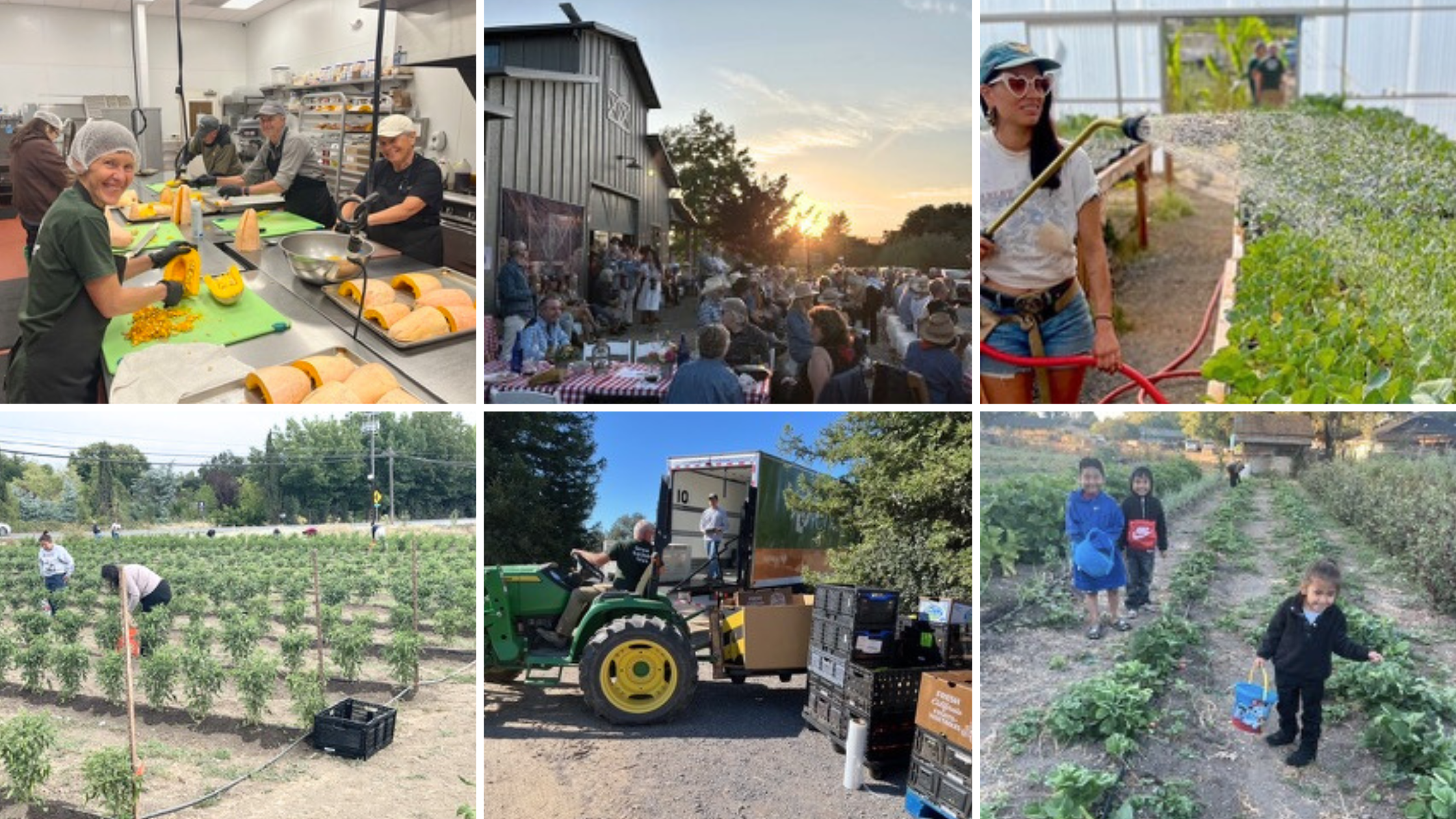
At Farm to Fight Hunger, everything that is grown is shared. Their team sustainably grows vegetables and pasture-raised eggs and donates 100 percent of it to the people in our community who need it. With support from Healdsburg Forever, their team of farmers, volunteers, and community partners expanded growing efforts across Healdsburg and beyond, increasing both the amount of food produced and the number of people reached.
Below, co-founder and farmer Bruce Mentzer shares how this year’s grant made a difference, what they are seeing in the community, and what comes next.
Q: How has support from Healdsburg Forever made a difference for Farm to Fight Hunger?
The Healdsburg Forever grant was used for general operating support, which allowed us to expand our growing and increase vegetable and egg donations. This year we were able to have three payroll employees for the first time, all young farmers, which was critical to managing that growth. Administrative work continues to be handled by the founders and our working board, but having dedicated farmers in the fields made a huge difference in what we were able to produce and donate.
Q: Can you share some key outcomes that highlight the impact of this support?
This year, working alongside our partner Zeke Guzman and Jardin Del Pueblos, we supported grow to give farming at six locations, including our home farm in Healdsburg. We provided mentorship, seeds, plant starts, irrigation support, soil amendments, and helped with harvesting where needed.
As a result, we increased the total amount of food we grew, harvested, and donated to 96,000 pounds, or about 384,000 servings, along with more than 34,000 eggs. That represents more than a 30 percent increase over last year.
We also continued supplying seeds and plant starts to other organizations working to expand access to healthy local food, including Sonoma County School Gardens, Burbank Housing, Reach for Home, Master Gardeners, Farm to Pantry, and Corazon Healdsburg. Our partnership with the Redwood Empire Food Bank has also grown. They now pick up directly from the farms and help provide harvest volunteers at several sites.
Q: What challenges are you seeing right now, and how are you responding?
Food insecurity is increasing, and many people are afraid to come out to food distributions. Several of the farms we support are operated by farmworker volunteers themselves. They have first access to the food they grow for their own families and communities, with the remainder going into food banks and local distribution systems like the Healdsburg Food Pantry, Redwood Empire Food Bank, and other direct distributions in Healdsburg and Geyserville.
Cuts to food aid funding and SNAP programs have also made the situation more challenging, increasing demand at the same time that funding is tightening. We are working to grow more food locally to help meet that rising need.
Q: What’s next for Farm to Fight Hunger, and how do you see your work evolving?
We are planning to expand our board in 2026 and are setting up an advisory committee to help us think through expansion and build a more sustainable future. There is also an opportunity to farm an additional two to ten acres adjacent to our home farm, which would significantly increase our growing and giving capacity. That kind of growth requires thoughtful planning, but it is an exciting possibility.
Our work depends on our community. Volunteers, supporters, in kind donors, local granting organizations, and hundreds of people all play a role in making this possible. It truly takes a community effort to do what we do. The grants from Healdsburg Forever have been integral to our growth and success.
To learn more about the work of Farm to Fight Hunger, visit farmtofighthunger.org.